Breathwork Before Sleep: Calming Routines for Insomnia with Yoga Training Bali
Hey there, friends.
We see you. It is 2am, and there is no noise in the house, yet your brain is on a marathon. Perhaps you are re-running a dialogue that you had three years ago, or maybe you are mentally writing a to-do list that you will have tomorrow. It has happened to each of us; we look at the ceiling and have a desire to have a switch to stop our brains.
Being yoga teachers, we spend our days working with people to get their bodies moving, but our favorite secret weapon is not a tricky pose or even a bendy spine; it is the breath. Breathwork to sleep is about to become the new best friend in case you are experiencing insomnia or just simply cannot fall asleep due to evening anxiety.
In this post, we are going to explore in-depth why your breath is the remote control to your nervous system and take you through some of the simple and calming practices you can perform yourself right at your pillow. No yoga mat required.
Why Your Breath Is the Off Switch You Have Been Seeking.
Now, before we get into the how, let’s talk about the why. Our bodies are largely governed by the autonomic nervous system, which works through two primary modes.
The Sympathetic Nervous System: This is your fight-or-flight response. It’s incredibly useful when you need quick energy to deal with challenges, meeting deadlines, solving problems, reacting quickly. But when this system stays switched on for too long, it becomes the enemy of restful sleep.
The Parasympathetic Nervous System: This is the rest-and-digest state. It is where the real magic of recovery happens. Your heart rate slows, your muscles relax, and the brain receives the signal that it is safe to let go and fall asleep.
When insomnia shows up, we often find ourselves stuck in a loop of sympathetic activation. We are tired, yet wired. The mind keeps running even when the body wants to rest. This is where breathwork becomes incredibly powerful. By intentionally changing the rhythm and depth of our breath, we can directly influence our nervous system and gently shift the body from stress mode into rest mode. This is not mystical thinking, it is grounded in physiology.
At Maa Shakti Yog Bali, this understanding forms the foundation of how we approach sleep and anxiety with our students. In many of our programs, including the yoga teacher training course in Bali, we explore how breathwork, mindful movement, and relaxation techniques help regulate the nervous system rather than fighting against it.
Instead of battling the mind, we learn to guide the body into a calmer state, allowing sleep to arrive naturally.
Introduction: The Pre-Breathwork Ritual.
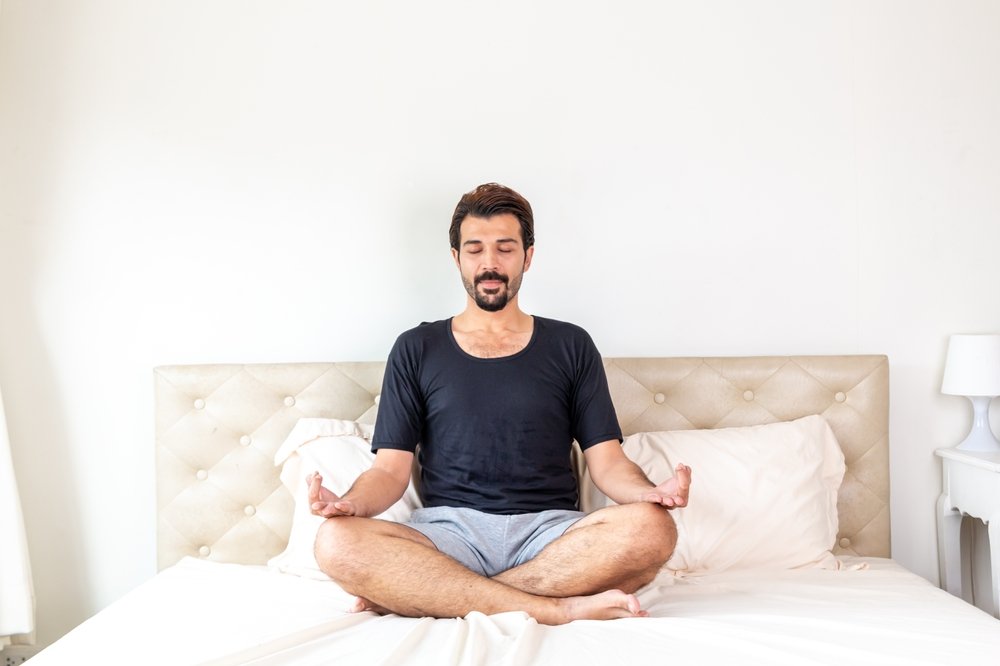
You would not attempt to make a campfire in the rain, would you? Likewise, breathing exercises are best performed when you have established the correct atmosphere. We should discuss sleep hygiene before we discuss the techniques.
- Turn off the light: Your brain requires black in order to make melatonin.
- Put the phone down: Phone blue lights wake up your brain literally. Store it at least 30 minutes prior to sleep.
- Make yourself cozy: get your room cool; make your pajamas comfortable.
So then when you are snugly in, we will start.
Technique 1: The Gold Standard—4-7-8 Breathing.

Also Read: Finding Your Center: Understanding Samadhi Beyond the Asanas
This is the breathing technique that we would teach the rest of our lives. The 4-7-8 breathing method that was developed by Dr. Andrew Weil is a natural tranquilizer of the nervous system.
How to do it:
- Breathe out with your mouth in a big breath of whoosh.
- Close the mouth and breathe in quietly with your nose up to 4 counts.
- Breathing 7.
- Breathe out all the air with your mouth and count to 8.
Why it works: It is the protracted exhalation. When your breath is more protracted than the breath you inhale, your vagus nerve tells you to slow down the heart rate. The hold enables your body to oxygenate itself and get into a rhythm.
Instructor Tip: It is not the end of the world, in case 7 seconds at the beginning seems to be too long. That defeats the purpose. Simply maintain the ratio at the same (e.g., 2-3.5-4). You shall grow stronger through practice.
Technique Form 2: Box Breathing (Square Breathing)
Navy SEALs are said to use this to remain composed during stressful moments. As long as it is working in their field, it surely will work in yours when you find yourself stressed about the meeting you have at 9:00 AM the next day.
How to do it:
- Breathe in using your nose and hold for 4 seconds.
- Hold your breath for 4 seconds.
- Breathe out using the nose in 4 seconds.
- Breathe out for 4 seconds without filling your lungs.
- Think of a square you are drawing in your mind. Four on four, four up the floor, four on four, four on four.
Why it works: Box breathing is unbelievable in terms of anxiety alleviation. It must be concentrated enough to forget intrusive thoughts but not too hard as to keep you awake.
Technique 3: Diaphragmatic (Belly) Breathing.
The majority of us are chest breathers. When we get stressed, our breathing is shallow and quick, and it remains in the upper chest. This literally informs your brain to be on guard! The fundamental technique of any yoga to sleep is belly breathing.
How to do it:
- Put one hand on your belly and another one on your chest.
- As you breathe in deeply using your nose, you can feel your belly hand going up, but the one on your chest remains quite still.
- Breathe out slowly, with your nose or with your lips pursed, and your stomach sinking.
Why it is effective: This puts full involvement on the diaphragm. It is the most effective way of breathing and sends a signal of all-clear to your brain immediately.
Technique 4: Nadi Shodhana (Alternate Nostril Breathing)
Also Read: Yoga Nidra and Its Transformative Benefits | Comprehensive Guide
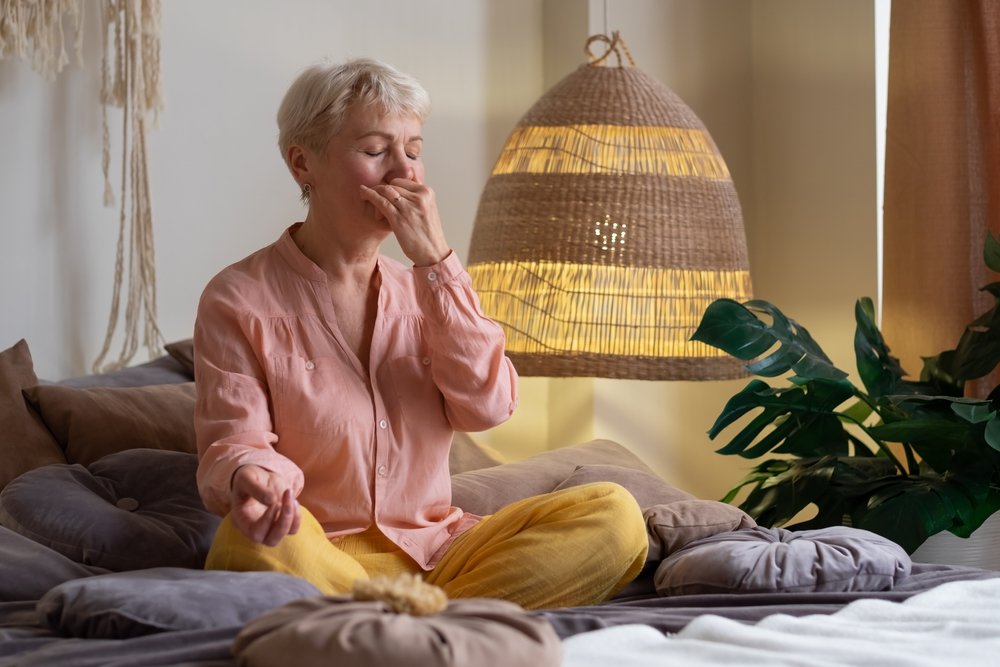
In yoga we refer to this as channel-clearing breath. Although the traditional version is commonly performed sitting up, we can perform a modified version of the version that is gentle, which balances the right and left sides of the brain, to perform it during sleep.
How to do it:
- Place your right hand in a very comfortable position. With your thumb, close your right nostril gently.
- Breathe in, using the left nostril.
- Use the left finger to close the nostril on the left and the right finger to open the right nostril and breathe out using the right nostril.
- Inhalation through the right nostril.
- Pull the right, shoot the left, and breathe out the left.
Why it works: This practice is thoroughly rooted. It makes you pay attention to the physical experience of air in motion, and it is a terrific means of bringing a fussy, overwrought head down to earth.
Techniques Comparisons: Techniques at a Glance.
| Technique | Best For… | Difficulty |
| 4-7-8 Breathing | Falling asleep quickly | Moderate |
| Box Breathing | Reducing nighttime anxiety | Easy |
| Belly Breathing | General relaxation & stress | Very Easy |
| Nadi Shodhana | Quieting a racing mind | Moderate |
It Should Be a Habit: Success Tips.
- The key ingredient is consistency. You cannot go out and run a marathon just because you jogged once, and your nervous system needs to be trained to relax when ordered to.
- Don’t wait until you are in crisis: Practice them for five minutes even on those nights when you are not in crisis. This develops the muscle memory when you actually require it.
- Take it easy on yourself: When your mind goes dilly (and it will!), do not get upset. That just wakes you up more. All you have to do is to just notice the thought and say, “noted,” and come back to the count.
- Add visualization: As you breathe, you can visualize you are filled with soft warm light that is flowing in your legs, up to your head.
A Personal Note from the Mat
We will tell you the truth: we, too, being teachers of yoga, sometimes need to have nights when our brains can be compared to a computer browser with 50 tabs open in it. We always used to be so angry with ourselves because we could not simply sleep. However, we changed the moment we started to consider our breath as our physical means and not our mental burden.
The only component of your autonomic nervous system that you may control is the breath. You cannot slow your heart rate by thinking of it, but you can slow your breath, which in turn makes your heart slow down. You dominate your rest more than you imagine you do.
Final Thoughts
Insomnia may seem like a desperate and single-handed battle, but you do not have to wrestle with it like a man. These relaxing habits before going to sleep are allowing your body the right to relax.
The breath can always be there, whether you are already a yogi or you have never practiced the so-called mindfulness in your life. It is free, portable, and highly effectual.
Sweet dreams, friends. You’ve got this.