Rewiring the Body: How Yoga and Pain Reprocessing Change Your Chronic Pain Story
Hello there.
We are happy that you have come to this place. And if you are reading this, you or a person you love is probably having a problem of pain that just won’t leave. It would be a sore, often painful feeling in your lower back, which has been there a long time, or it could be an acute, unpredictable pang that causes you to be reluctant even to get out of bed.
The first thing we wish to share with you is the following: we hear you. Chronic pain is not only a physical condition; it is taxing, frustrating, and can be very lonely. However, there is one viewpoint that we would like to discuss today, and that will be an authentic way ahead. We will discuss yoga and pain reprocessing.
It is so technical, you see? “Pain reprocessing.” Yet in its core it is a lovely, optimistic idea. It is the thought that our brains can detrain pain. With a soothing, conscious practice of yoga and the science of our nerve mechanisms, we can indeed begin to alter our bodily communication with our minds.
Getting a Glitch of the System: What is Chronic Pain?
In order to learn how yoga works, we must know what chronic pain is. The majority of us grow up believing that pain is injury. And when your finger is sore, you know you cut it. Chronic pain, however, which is a persistent one that can take months or even years, is usually not the same.
Imagine your nervous system is a home security system. In acute pain (as a broken bone), the alarm system is activated due to the presence of a burglar (injury). However, in chronic pain the alarm system becomes hypersensitive. It begins to ring due to a leaf blowing through the window or due to the wind blowing the curtains.
Scientists refer to this as neuroplasticity run amok. Your brain has gotten so used to safeguarding you that it has learned to make pain even when there is no structural damage to repair. The neural pathways are now super highways to the pain signals.
What is Pain Reprocessing Therapy (PRT)?
Pain Reprocessing Therapy (PRT) is a mental model that educates the brain that such long-term sensations are, in fact, safe. When we get hurt, it is the natural body reaction to freeze and stiffen and be scared. This panic informs the brain, “Yes, it is dangerous!” Send additional pain signals! It’s a vicious cycle.
PRT is designed to end that cycle by reconditioning the brain to reprocess those signals as either neutral or safe. And this is where yoga comes in the picture.
Yoga: The Ultimate Aid to “Safe” Movement
Also Read: Fasting and Yoga: Ancient Practices for Modern Health
Yoga is far more than bending or bending your leg behind your head. Yoga is experiential medicine in the context of pain. This is the approach we follow at Maa Shakti Yog Bali, where yoga is used not just for flexibility, but as a tool for nervous system healing and pain awareness.
1. Somatic Tracking: Without Judging
Somatic tracking is one of the fundamental foundations of the process of reprocessing pain. This is about being curious about the physical experiences in your body instead of being afraid.
When you are in a light pose during a yoga practice, say you are seated in a side stretch, you may experience something in your hips. When you think, instead of “Oh no, there is that again, my hip is ruined,” yoga gets you to think, “Ah, there is a warmth there.” It is a bit tight. It is moving as I breathe. Through the feeling itself, minus the danger tag, you are in fact training your brain to reduce the volume of the alarm system.
2. The Power of the Breath (Pranayama)
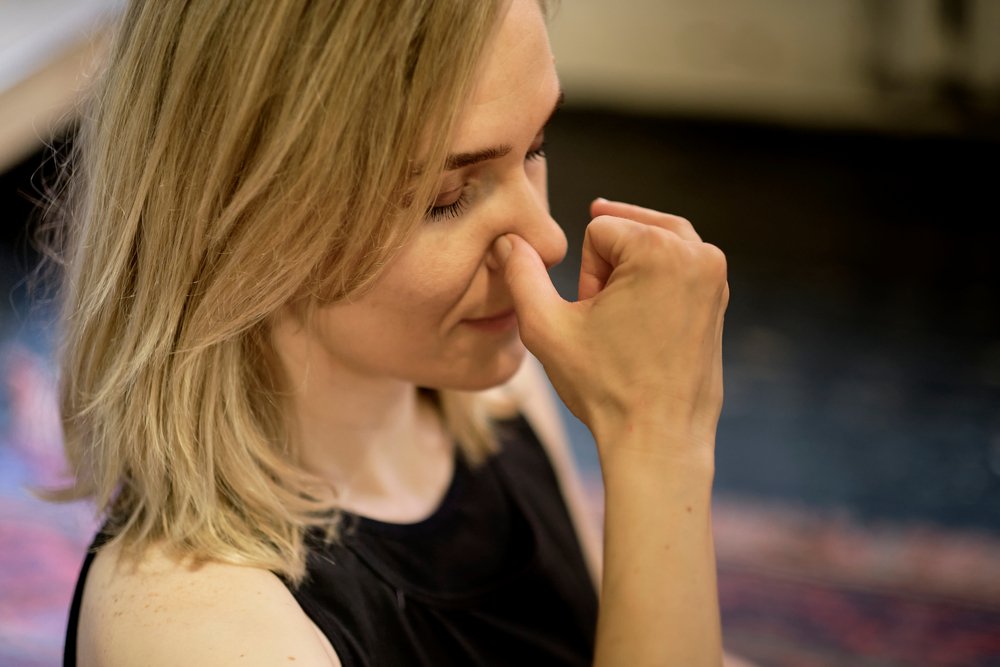
The nervous system is your remote control that is operated by your breath. When we are suffering, we breathe shallowly and fast. This maintains us in the fight-or-flight response (the sympathetic nervous system), which is in fact more sensitive in relation to pain.
Yoga stresses slow, deep breaths. By slowing down your breath, you are giving your brain a physical message that you are safe. This stimulates the parasympathetic nervous system (the rest and digest mode). Your brain in this state has a much higher chance of reprocessing a pain signal as not a threat.
3. Fear-Avoidance Cycle
As soon as something is painful to us, we cease moving it. It is referred to as fear-avoidance. The issue is that, when we cease to move, our muscles become weak, and our bones become stiff, and our brain becomes even more convinced that it is dangerous to move.
Yoga presents progressive exposure. Our first movements are very small, very safe. Perhaps it only takes moving your wrists or a gentle tilt of your pelvis in a lying position. The fear starts to disintegrate as your brain thinks, “Hey, I moved and nothing got broken.” We slowly accumulate bigger movements, reclaiming the body bit by bit.
The easiest yoga session to reprocess the pain
Also Read: Office Yoga: Stretches for Desk Workers
You do not need a good mat or costly leggings to begin with. All you require is a quiet place and some time. This is a series that is specifically created to make you practice safe movement.
Step 1: Grounding and Breathing (3-5 minutes)
Find a comfortable position or lie on your back. Lay one hand on your heart and the other on your belly. It is safe to close your eyes. Just breathe. Don’t try to change it yet. Only feel the incoming and outgoing air. A minute later, attempt to prolong your exhales a bit more than your inhales. Breathing In: Think to yourself, “I am safe, my body is strong, these feelings are just signals, and I am okay.”
Step 2: Light Neck and Shoulder Release
Gradually bend your right ear down to your right shoulder. Feel the pain on the left part of your neck. Is it a pull? A tingle? Use your “curious voice.” Rather than pain, refer to it as energy or sensation. Switch sides slowly. Here we have somatic tracking at work.
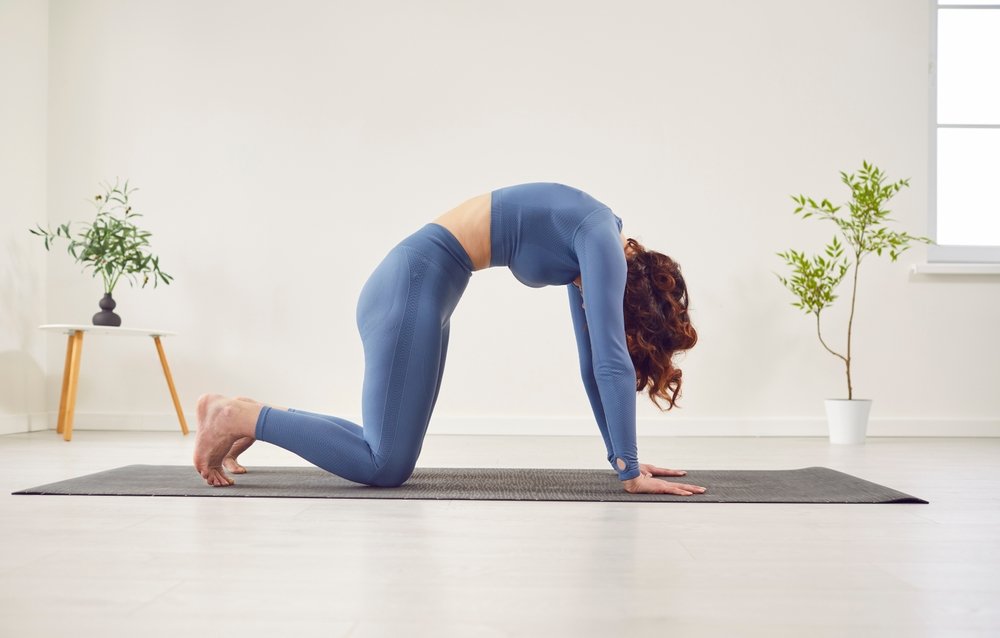
Step 3: Cat-Cow (The Fluid Spine)
Get onto your hands and knees. When breathing, sink the belly towards the floor and look up a little (cow). Round your spine towards the ceiling like a cat (cat). Go as slowly as you can. If you feel a “ping” of pain, don’t stop immediately. Micro-movements are small movements that inform the brain that the spine is free to move.
Step 4: Pose of supported child
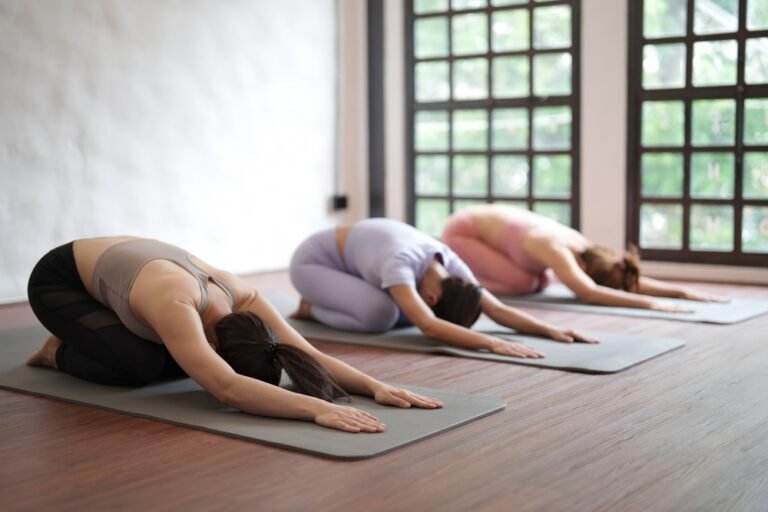
Get on your knees and hunker down on your heels and tuck yourself in. You may place a pillow under your chest so as to have added support. This pose is the ultimate “safety” posture. A literal embrace of your nervous system. Remain for 2 minutes, paying attention to the sensation of weight on the floor.
Success tips: It’s all about attitude
When you start using yoga to relieve chronic pains, remember the following three Golden Rules:
- Patience is a Virtue: You did not gain chronic pain in a day, and the neural pathways will not change in a day. Imagine that to be brain physical therapy. Unity is greater than intensity.
- Get rid of the No Pain, No Gain Mentality: This is not the place to use that. We desire no fear, more gain in pain reprocessing. When a movement produces a sharp, “danger” type of pain, back off. Locate the edge at which you sense but do not feel threatened.
- Language Matters: Begin to change your talk about your body. As opposed to saying that I have a bad back, say that the back is sensitive at the moment. This tiny distance between you and the pain is formed.
Bringing it All Together: Your New Path
Pain that becomes chronic may seem like a prison, yet the walls are frequently composed of the neural habits that are learned. Through yoga as an intermediary, you will be able to begin breaking those bars. You are training your brain that movement is medicine, the breath is your safety, and your body is not your enemy.
It is not that yoga and pain reprocessing are about repairing something that is broken; it is about re-establishing the connection between your mind and your body. It is not how much you move because you like the idea of breathing, but because you are attempting to beat the pain into submission.
We would recommend you attempt the easy breathing practice before sleeping tonight. Just five minutes. Notice the sensations. Breath in tight places. Remind your brain that, during this time, you are safe.
You can make your own story. Breath by breath, one move at a time.
Frequently Asked Questions (FAQ)
Is yoga a cause of chronic pain?
When you overdo it or concentrate on performing a pose, it may result in a flare-up. The magic is conscious yoga. It is not the stretch; it is the sense of safety. You should always listen to your body and have a chronic pain-aware instructor.
What is the duration of the effect of pain reprocessing?
Everyone is different. Others experience a change in their fear of pain almost instantly. In other cases, it takes weeks of practice to see the levels of physical pain reducing. The win is usually less fear of the pain initially.
Do I have to be loose to do yoga to relieve pain?
Absolutely not! Actually, it is not always a disadvantage to be inflexible since you experience sensations more readily and have more time to practice somatic tracking. Yoga is for everybody.