Finding Your Flow: The Ultimate Guide to Finding Hormonal Balance with Natural Yoga.
Hey there, friends. Get yourself a cushion, get yourself a cup of herbal tea, and have a heart-to-heart.
You have made it to this page; you feel a little out of step, do you? Perhaps you are dealing with obstinate fatigue that cannot be cured by all the coffee in the universe, or your tempers are like a weather forecast in hurricane season. Perhaps your skin is breaking out like you are a teenager once again, or you are tossing and turning at 3.00 AM without any apparent cause.
We would first like you to breathe deeply and feelingly. Breathe four… pause… and inhale six.
It is not just in your head, what you are feeling. It is extremely likely to be the consequence of a sensitive inner dance getting out of step. We mean your endocrine system, the complicated system of glands that secrete hormones, which control nearly all the functions in your body.
During our many years as yoga teachers at Maa Shakti Yog Bali, we have observed how physical practice (asana) and breathwork (pranayama) act like a reset button for the body’s internal messengers. We would like to explore the science and the nature of how yoga can make you balance your hormones without any drugs today.
Interpreting the Internal Symphony.
Imagine that your hormones are orchestra musicians. When the thyroid (metabolism), adrenals (stress response), pancreas (blood sugar), and ovaries or testes (reproduction) are working off the same sheet music, you feel vital, energetic, and clear-headed.
However, in our fast-paced world today we tend to remain in a condition of constant stress. This over drives our sympathetic nervous system. When this occurs, the orchestra conductor is substituted with a siren. Cortisol (the stress hormone) is of higher priority to the body compared to all other things.
The prolonged high levels of cortisol steal resources of other hormones. This results in so-called hormonal imbalance. That is where yoga comes in, not as a physical exercise, but as a biological intervention.
The Science: Yoga Cures the Endocrine System.
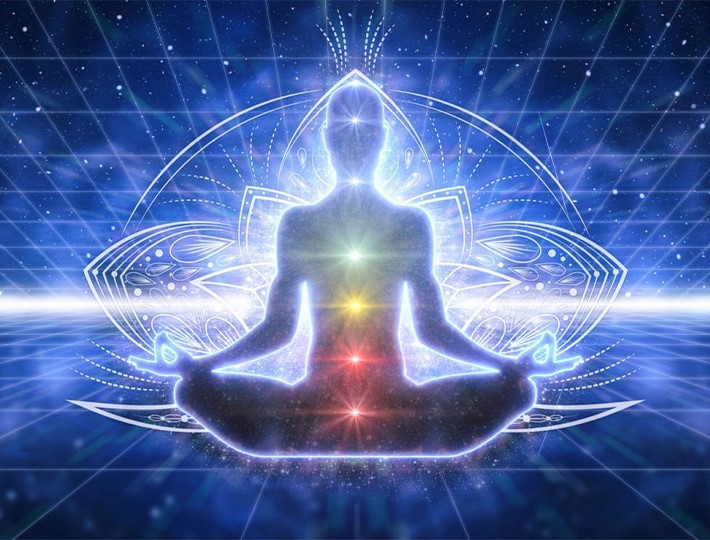
Also Read: The Science of Auras and How Yoga Affects Your Energetic Field
You may be asking yourself, “How is my hamstring stretch going to heal my thyroid? It’s a great question! Yoga acts on three main levels to facilitate your hormones:
1. The Nervous System Bridge
Yoga is among the most appropriate to trigger the Parasympathetic Nervous System (PNS), or the rest and digest mode. The slow and deep breaths send a message to the brain that the lion no longer chases you. This enables the levels of cortisol to decrease, which signals to your other glands, such as the thyroid and ovaries, to start working normally once again.
2. Direct Glandular Stimulation.
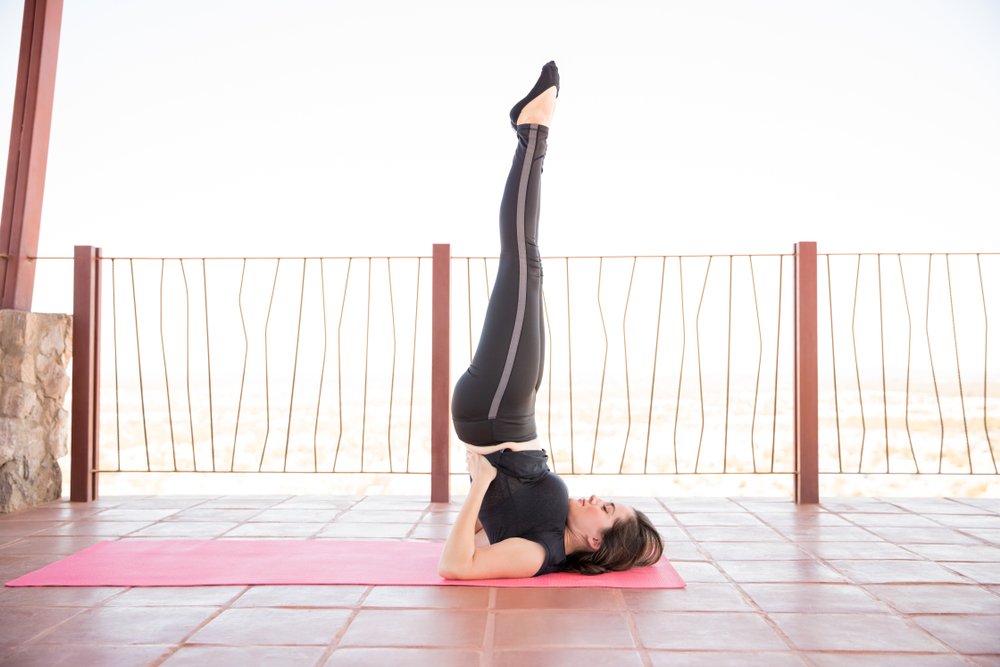
Some of the yoga stances (asanas) produce a squeeze and release action. To give one example, we cut off blood flow to our thyroid gland temporarily when we perform a pose that compresses the throat (such as Shoulder Stand). Releasing the pose, there is a new influx of oxygenated blood into the area. This aids in cleansing and encouraging the gland and enhances metabolic activity.
3. Reduction of Systemic Inflammation.
Inflammation is usually associated with chronic problems in hormones. Clinical studies have shown that yoga, and especially restorative yoga, will reduce pro-inflammatory markers in the blood. By relaxing the body, you are setting a good stage for the growth of hormonal health.
Poses According to Hormonal Requirements.
Also Read: Sun Salutations & Savings: Your Guide to Budget Yoga Retreats in 2025!
Let’s get into the “how-to.” Deposits may have various advantages depending on your mood. The following is a breakdown of the most effective yoga for hormonal imbalance.
In the case of stress and adrenal fatigue: Legs-Up-The-Wall (Viparita Karani).
- Do this one in case you have only five minutes per day. Inverting gravity, you put a calming effect on the nervous system and take a refreshing break on the adrenal glands.
- The process: Sit against a wall in a sideways position and then just swing the legs upwards whilst lying the back on the floor. Hold your hips as near to the wall as you can. Close your eyes and breathe.
- The Advantage: It reduces blood pressure and instructs the brain to cease the synthesis of the fight-or-flight chemicals.
In Thyroid Health: Rabbit Pose (Sasangasana).
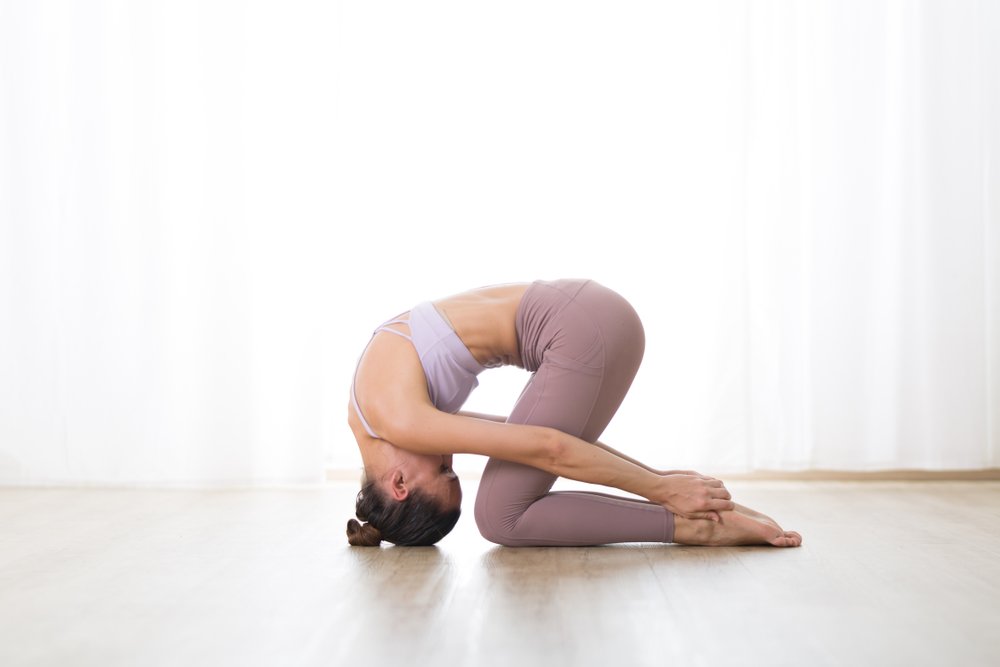
- Your neck has a gland that is called the thyroid gland, and it controls your metabolism. Rabbit pose offers a great throat lock.
- How to do it: Kneeling is good; reach back and hold on to your heels. Tuck your chin so far in your chest that you should be rounding your spine and the top of your forehead towards the knees.
- The Benefit: This activates the thyroid and parathyroid glands, and this may aid in energy levels and control of weight.
To treat menstrual cycle and reproductive health: Goddess Pose (Supta Baddha Konasana)
It does not matter whether you are facing PMS, PCOS, or menopause symptoms, but it is important to open the area of the pelvis.
- The way to do it: Position yourself on your back with the soles of your feet together and knees spread open to the sides (like a butterfly). Use pillows to support your knees in case it is too strong.
- The Benefit: The pose enhances blood flow to the reproductive organs and relieves emotional tension that is held in the hips.
- To get: Detoxification and Digestion: Seated Spinal Twist (Ardha Matsyendrasana)
The liver processes hormones.
- When your digestion is slow, then your body is unable to clear old hormones, and they accumulate (such as estrogen dominance).
- Practice: Strauss with legs straight, cross herewith on the other knee, and twist softly towards the erect knee.
- The Benefit: Twists perform as a sort of wringing out of the internal organs and help the liver and the gallbladder in the detoxification procedure.
The Role of Breath (Pranayama)

Also Read: Sattvic Foods for Mental Clarity: A Practical Guide
Breath is equally significant to movement in the field of natural hormone therapy. Have you ever observed that when you feel stressed, your breath is shallow and it does not leave your chest? This, in fact, strengthens the stress loop.
Attempt Nadi Shodhana (Alternate Nostril Breathing). This is an old method that aims to equalize the left and right sides of the brain that subsequently equalizes the Hypothalamus-Pituitary-Adrenal (HPA) axis. This axis is the so-called CEO of your hormonal system. Even a three-minute session of this exercise would dramatically reduce your heart rate and stabilize your mood.
Making Yoga a Part of Your Life.
- We always explain to my students: Yoga is not something to do; it is a state of being that one is headed to. The following ideas will help you to achieve a significant improvement in your hormonal health:
- Sync with Your Cycle: Energy changes by the month if you are the type of person who menstruates. The gentle and restful poses should prevail during your inner winter (your period). You can take that Vinyasa high-intensity class during your inner summer (ovulation)!
- Morning Practice: Morning practice will help establish your circadian rhythm that controls your sleep-wake hormones (melatonin and cortisol).
- Stall a Sanctuary: You do not require a complicated studio. It does not take much to make your body believe that you are okay to relax right now: a comfortable nook, a plush carpet, and a candle.
A Word on Patience and Self-Love.
It does not occur that hormonal imbalances occur at once and will disappear at once. The body needs time to readjust. Yoga as a hormone control method is a slow medicine technique.
Be kind to yourself. In case you are too exhausted to have a full flow, a five-minute Child Pose can be yoga. When you are crying over a hip opener, cry; it is not going to waste—that is all the emotional energy coming out of the body.
Making this decision by becoming a yoga student, you are making a powerful move to experience the whole. You are hearing your body whispers before they turn into screams.
Ready to Start Your Journey?
We understand that this was much information, but the most significant thing is to simply get on the mat. Yoga is a steady ally whether you have to deal with menopause symptoms, improve your fertility, or simply cease being so burnt out.