Floating Yoga: The Rise of Aqua Asanas
Welcome back to our shared mat, friends! Or the common pool… anyway?
We have some great news for you if you’ve been a bit stuck in your yoga practice lately, or if the idea of rolling out your yoga mat in a hot yoga studio just seems a bit too intense these days, anyway! Wellness is facing a new wave, and we want you to get in on it with us!
At Maa Shakti Yog Bali, we believe yoga is meant to evolve with you. Whether you’re practicing on solid ground or floating on water, every new experience offers another opportunity to deepen your connection with your body, breath, and mind.
So today we are going deep into floating yoga, aka aqua asanas or stand-up paddleboard yoga (SUP yoga).
From the yogini who can hold a handstand for days to the beginning yogi who still doesn’t know which direction to take in downward dog, aqua yoga has something magical for everyone. Let’s get into the reasons why this water-based practice is taking the wellness world by storm, the incredible benefits it offers to the mind and body, and how you can get started.
So, what is floating yoga?
Floating yoga is simply a method for taking any yoga pose you’re familiar with and placing it on the water.
This typically occurs in two ways:
- SUP Yoga: Yoga performed on a stand-up paddleboard that is anchored on a lake, river, or calm ocean bay.
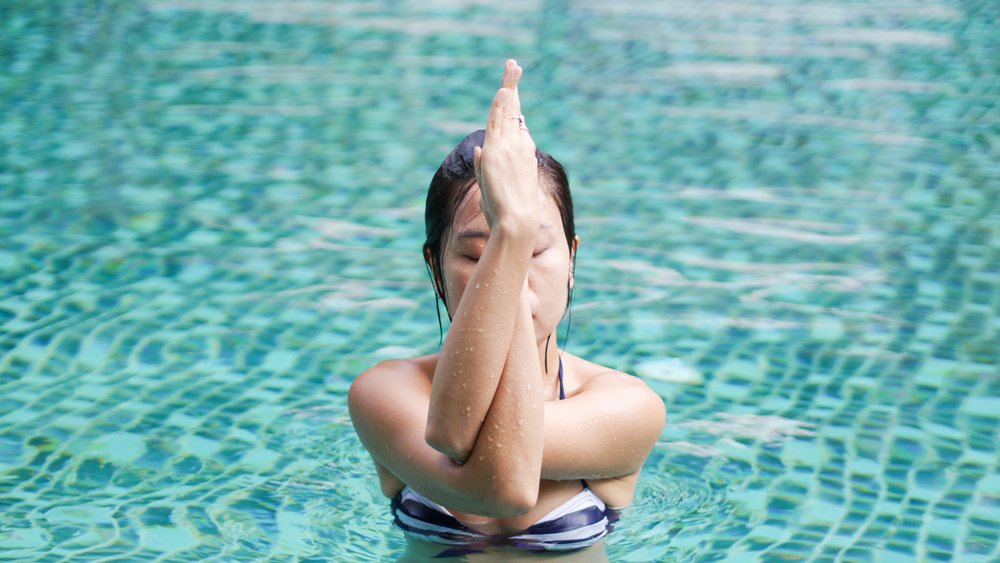
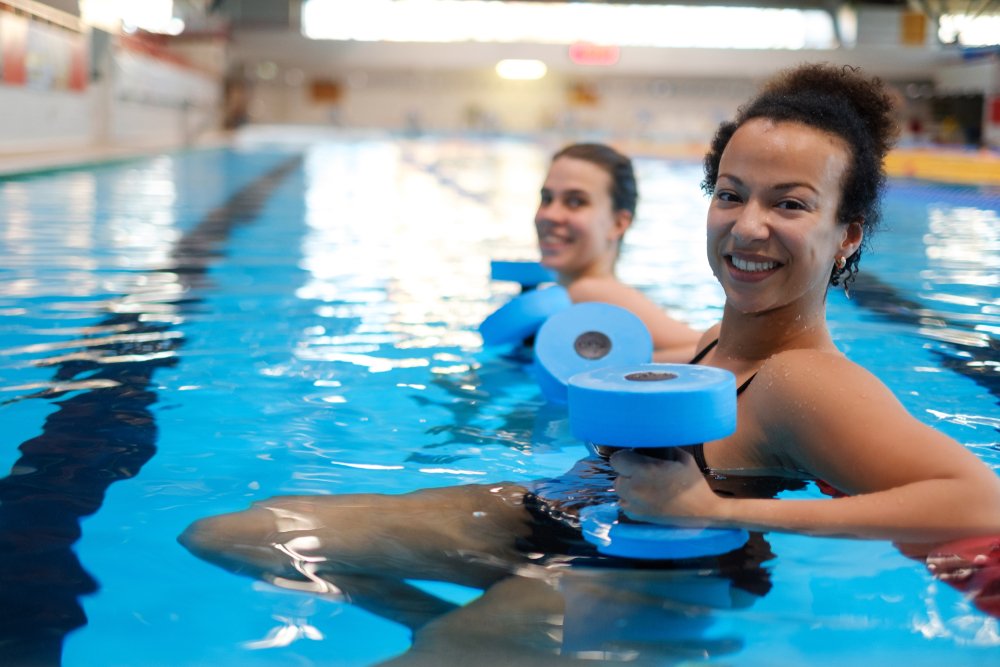
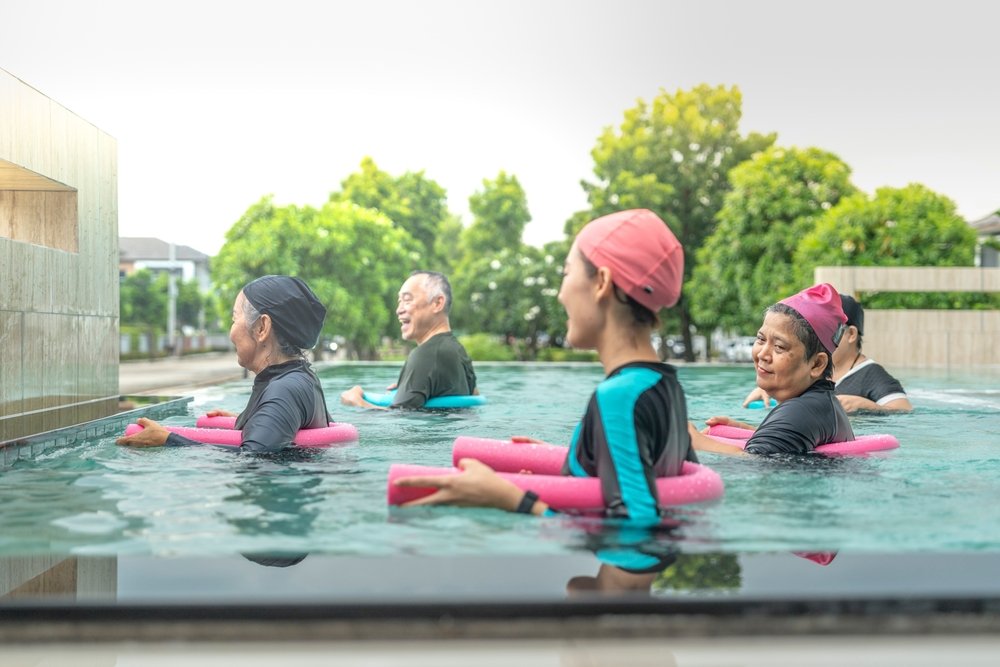
- Pool Aqua Yoga: Taking yoga classes in a swimming pool, either using special tethered floating fitness mats (such as Boga boards) or performing in waist-deep water.
We think this practice is fantastic, as it changes the way we think and experience gravity and balance! Every little wave your body has to adjust to, and it’s a whole new experience for the muscles and for the mind.
The importance of taking your practice to the water.
Also Read: Yoga Underwater: Does It Really Work?
Isn’t it enough to struggle balancing on dry land?!? We hear you! It sounds intimidating. Trust us, the benefits of switching from mat to water are worth it.
1. The Ultimate Core Workout
If you’re in the mood for engaging your deep, stabilizing muscles, there’s no better way. It is easy to “cheat” a little in our poses on a hard studio floor by relying on bone stacking or gripping the floor. On the water? Not a chance!
The board or mat is constantly moving under you, so your core (transverse abdominis, obliques, and lower back) needs to be engaged 100% of the time just to keep you upright. You will find yourself with muscles you didn’t even know you had and making the incredible functional strength that you can build.
2. Instant Alignment Feedback
The water is a brutally honest teacher, yet very gentle. When doing a low lunge, don’t put too much weight on the left hip, or the board will tip to the left. The board will tell you immediately if you’re not doing a warrior pose with your legs.
This liquid feedback loop requires us to get to the center. It helps us to distribute our weight evenly and intentionally. You’ll be amazed how much more aligned and stable you feel in your postures when you head back to your regular studio practice on land.
3. Very low impact, accessible.
If you have friends that suffer from any kind of joint pain or arthritis, are recovering from an injury, or have extra body weight, traditional yoga may sometimes put too much strain on the wrists, knees, and ankles.
The body does not have as much of the effect of gravity when it contains water. Wearing the buoyancy while in the water will help to take pressure away from the joints and give you more freedom of movement. A lovely approach to mindful moving without the pain!
4. Conquering Fear, Learning Playfulness
Once in a traditional class, sometimes we get so busy trying to “look perfect.” We’re concerned with our egos. However, floating on water, it is very possible that you may lose your balance and splash directly in!
And you know what happens next?
When we fall, it breaks the ice, it tears down our self-esteem, and it allows us to have the childlike wonder of play in our grown-up lives. It’s a reminder to not be so serious. We laugh and we get wet; we climb back up and we try again. That’s what it’s all about in yoga.
The Healing Power of Water
When you step onto a floating mat, there’s more to the workout than just physical changes, the mental and emotional ones too.
It has been called the “Blue Mind” state by science, which is a form of relaxation that is meditative but not overwhelming and in which people are calm, peaceful, happy, and content with life around them when they are near water.
Moving water stimulates the parasympathetic nervous system and, in turn, decreases cortisol / reduces stress.
When the soothing effects of water are combined with yoga breathing exercises (pranayama), the results are incredible. The sound of the waves against the board is soothing and rhythmic, and it’s easy to fall in sync with your breath. It calms a racing mind, reduces cortisol levels, and clears away anxiety.
Floating corpse pose, or Savasana, is truly a unique experience right here on earth. Follow your fingers in the cool water, feel the gentle rocking motion of the gentle waves, and gaze upwards at the sky… It is the best stress reliever and calming agent.
5 Aqua Asanas to Try on Your Floating Journey
If you’re ready to get your feet wet, here are 5 basic poses that will easily translate to that floating mat. To help you get your “sea legs,” we would recommend first doing some practice on your hands and knees, then standing!
| Yoga Pose | How to Modify on Water | Why We Love It |
| Marjaryasana / Bitilasana (Cat/Cow) | Keep your knees slightly wider than hip-width apart for a broader base of support. | Perfect for testing the stability of your board and waking up the spine. |
| Adho Mukha Svanasana (Downward-Facing Dog) | Step your feet closer to the outer edges of the board. Press firmly through your entire hand. | Gives an incredible stretch while forcing equal weight distribution between hands and feet. |
| Anjaneyasana (Low Lunge) | Keep your back knee down on the board. Keep your gaze fixed on a unmoving point ahead. | Opens the hips deeply while building core stability without the risk of a high-standing fall. |
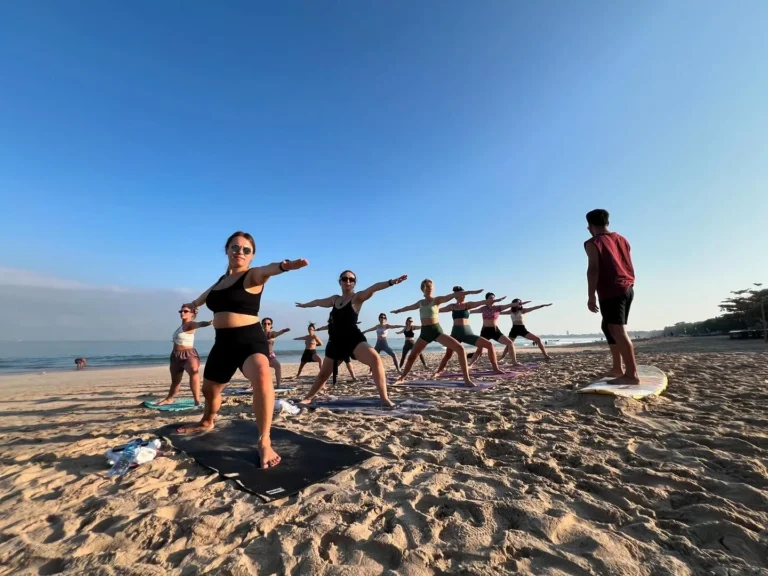
| Virabhadrasana II (Warrior 2) | Turn your torso to face the side, but keep your stance slightly wider and lower your center of gravity. | The ultimate test of focus, balance, and leg strength. An amazing confidence booster! |
| Savasana (Corpse Pose) | Lie flat on your back, let your hands dangle into the water, and just breathe. | Pure bliss. The gentle rocking motion acts as a natural lullaby for the nervous system. |
Here are some tips to keep in mind for your first floating yoga class:
Also Read: Top 5 Yoga Teachers Training Programs in Bali
We would like your initial experience of aqua asanas to be truly memorable (in a good way!). As you pack up your sunscreen and head for the beach, our teaching team’s tips for the beach-loving masses:
- Ponchos: If not wearing swimwear, wear comfortable athletic attire that dries quickly. Stay away from heavy cotton t-shirts that will become heavy when wet.
- Widen Your Stance: When walking on land, we tend to place our feet right under our hips. When out on the water, it’s much more stable to keep your feet spaced apart closer to the edges of the board.
- Look at Moving Water Under You (Find Your Drashti): You are likely to lose balance if you look at the moving water just under your feet. Instead, look at a stationary, unmoving object farther away that won’t move, such as a tree on the shore or the side of the pool.
- Don’t be frightened of the shake: If your muscles begin to shake, don’t get panicked! It’s just your nervous system adapting to the micro-movements of the water, your core adapting to them. Celebrate the shake.
It’s time to get ready to get wet!
Exploring practices like floating yoga is also a reminder that learning never really ends. Many yogis discover that each new experience, whether on a paddleboard, in nature, or through a 300 hour yoga teacher training Bali, offers fresh insights into movement, breath, and self-awareness.
Yoga should not be static. It is a living, breathing practice that continues to change as we do. The buoyancy of yoga is a reminder to stay in the flow, to be flexible to the changing landscape, and to discover calm amidst the turbulence of life.
Aqua asanas are a must to try to add some excitement to your fitness, to build core strength, or even to find a beautiful and new way to relax in nature.
Ever had floating yoga? Do you feel you need to swim and get into it, or do you fear drowning? If you have any questions or comments about this session, please leave them below or contact us to find out when our next pool and lake sessions will be.
Beautiful souls, breathe deeply, stay fluid, and namaste until next time!