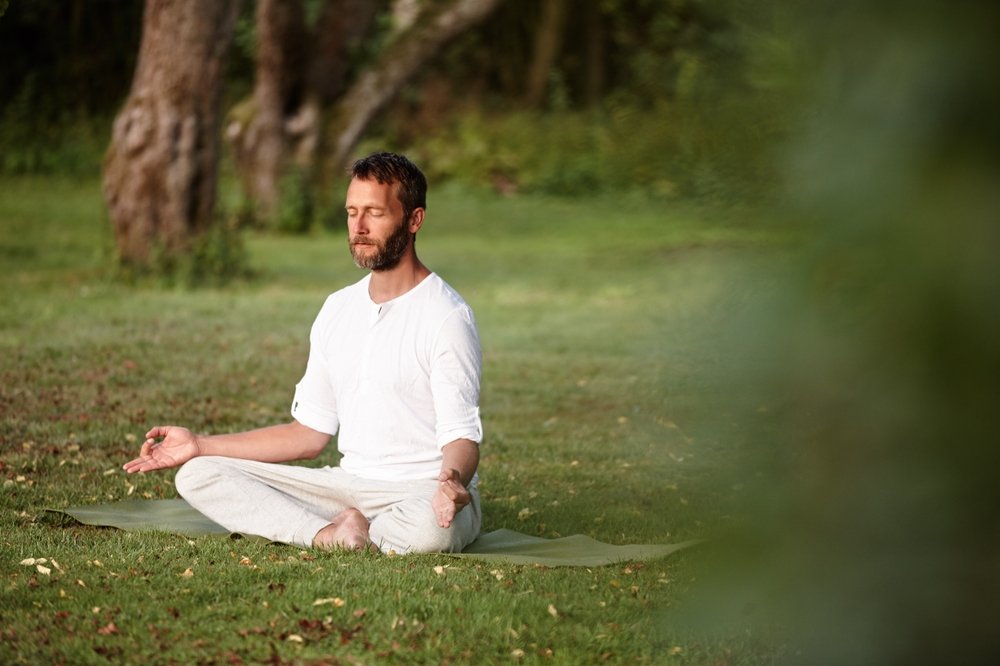
How Yoga Influences Neuroplasticity and Memory Retention
Hello, wonderful human beings and other wellness seekers!
Have you ever done a yoga session and felt that wonderful feeling of clarity? It is more than bodily relaxation; it is as though the fog was cleared, and your brain is now running on a higher and smoother frequency. You are more relaxed and clear, and you probably even remembered that appointment that you nearly forgot!
This is not merely an auspicious coincidence. And what you are going through is the deep, scientifically supported linkage between your practice and the structure of your brain. At Maa Shakti Yog Bali, we explore yoga not just as a wellness ritual, but as a powerful, evidence-backed practice that reshapes the brain and strengthens long-term mental resilience.
Today, we are going on a deep dive, a technical and friendly exploration of one of the most exciting neuroscience fields, namely, the role that yoga plays in neuroplasticity and significantly affecting memory retention.
We will break down the how and the why, going beyond wellness tips on the surface of what is taking place in your head when you roll out your mat in terms of the changes at the molecular and structural level. You will be dazzled by the final type of brain training!
The Brain: Plasticity in a Masterwork.
It is time to start with the actual appreciation of the idea of neuroplasticity. The adult brain was thought to be hard and unchangeable over a long period of time. We can now understand that, on the contrary, the brain is a very dynamic organ, one that changes at any moment, a super-sculptor of its own world.
Neuroplasticity consists of the capability of the brain to transform its form and activity during the lifetime under the influence of experience, learning, or even injury. This is in two major forms:
- Structural Plasticity: The actual building up of new brain circuits, fortification or declamation of synapses (the junction between brain cells), and even the growth of fresh brain cells (a process known as neurogenesis).
- Functional Plasticity: It occurs as a result of the roles of a section of the brain being replaced by another section that is either damaged or not utilized.
To achieve lifelong cognitive improvement and great brain condition, we should stimulate this plasticity. And what do you think the most convenient and pleasant catalyst is? Yep, it’s yoga.
1. The Chemistry of Calm: Cortisol and Amygdala Taming.
The fact that yoga is able to regulate the stress response is, perhaps, the greatest influence of yoga on the brain. This is very vital to the retention of memories.
The Cortisol Crisis: Killing Memory With Stress.
Our sympathetic nervous system (SNS) is on a continuous run when we are subjected to chronic stress (or the type of stress we encounter in our everyday activities at work, in traffic, and even in the speed of life in general). This overloads the body with cortisol and adrenaline. Cortisol, in large and sustained levels, is scientifically known to be neurotoxic; that is, it literally destroys brain tissue. In particular, they degenerate and diminish the hippocampus.
The hippocampus refers to a seahorse-like mass located deep in the temporal lobe and which acts as the point of transformation of short-term memories into long-term memories—it is the brain librarian. In cases where the hippocampus reduces, the formation of memories ceases, and the brain becomes cloudy.
Counter-Attack of the Vagus Nerve and PNS Activation by Yoga.

Also Read: Sattvic Foods for Mental Clarity: A Practical Guide
The Parasympathetic Nervous System (PNS), or the rest and digest part of the body, is a master that yoga triggers through its powerful combination of asana (postures) and pranayama (breathwork) practices.
The enhancing nerve for this is the vagus nerve, the longest nerve of the head that extends to the abdomen. Slow, deep, diaphragmatic breathing—the core of all yoga (such as Ujjayi)—directly activates the vagus nerve, which results in:
- Rapid Cortisol Reduction: Reduction of the stress hormones that harm the hippocampus.
- Amygdala Regulation: Soothing the amygdala (fear and threat center of the brain) so that it does not overreact and redirect cognitive resources.
The yoga environment creates an environment of stability and calmness in the internal environment to facilitate neurogenesis and where the existing neural circuits can thrive to an immense extent, enhancing brain repair and brain resilience.
2. The Molecular Magic: BDNF—The Miracle-Gro of the Brain.
The yoga pose, or asana, is essential in the release of a molecule that scientists adorably refer to as the Miracle-Gro of the brain: Brain-Derived Neurotrophic Factor (BDNF).
BDNF is a protein, which helps the existing neurons to be healthy and stimulates new neurons and new synapses to develop. It is critical to synaptic plasticity, the enhancement of the connections between neurons, which is the biological component of learning and memory enhancement.
The Asana-BDNF Connection
Physical activity of moderate to vigorous type has been known to enhance BDNF production. Yoga, in particular, dynamic yoga such as Vinyasa or Ashtanga, finds this happy medium:
- Enhanced Cerebral Blood Flow (CBF): Movement enhances cerebral supply of oxygenated and nutrient-rich blood. This improves blood flow so that the brain has the resources to form new connections.
- BDNF Upregulation: When the muscle cells contract, they release their factors, which inform the brain to generate more BDNF.
Regular and consistent practice corresponds to long-term production of BDNF, which is directly related to enhanced encoding of new information and enhanced long-term memory recall.
3. The Secret of Attention: Shaping the Frontal Lobe.
Yoga is not only movement but is mindful movement. It takes long-lasting, non-judgmental attention to follow the directive to watch your breath, observe the edge of the posture, and be in balance. It is an intentional and highly efficient type of executive training.
The structural alterations that have been observed in the brains of long-term meditators and yogis typically show the presence of increased volume of gray matter in some of the major regions:
- Prefrontal Cortex (PFC): The command center of the brain that is in charge of planning, decision-making, and most importantly in our case, working memory. Working memory is the one that stores and processes information in the short term, such as the recalling of a phone number long enough to call it.
- Default Mode Network (DMN): The DMN is associated with mind-wandering, rumination, and distracted thought; overactivity of the DMN decreases with yoga and meditation.
Yoga causes a radically better mental clarity and concentration and the capacity to deliberately and deliberately process and store new information by dampening down the distractive noise (the DMN) and increasing the strength of the decision-making part of the brain (the PFC). That is the reason you are so sharp after class!
Actionable Lessons: Mat Improvements to Memory.

Also Read: The Science of Auras and How Yoga Affects Your Energetic Field
To enjoy these cognitive benefits, you will not have to do three hours of advanced yoga a day. Neuroplasticity depends on consistency.
- Use Pranayama: A ten-minute Nadi Shodhana (Alternate Nostril Breathing) or slow, savory Dirgha (Three-Part Breath) suffices to instantly put your nervous system in the PNS and prepare your brain to work optimally.
- Don’t only concentrate on the pose; focus on how you get from one pose to the next. The best way to do that is to concentrate hard on the transition between poses and develop proprioception (the ability to know where your body is in space). When you develop proprioception, your neurons will form new connections with one another.
- At the end of your final pose (savasana), take 5-10 minutes to sit quietly and meditate. This is an important step in solidifying the neuroplasticity changes you made by practicing yoga. The meditation will give your mind the opportunity to solidify all of the new things you learned throughout your practice.
Practicing yoga is one of the most effective, evidence-based methods for developing a strong, flexible, and adaptable mind. Every breath you take and every stretch you do is a conscious, purposeful opportunity to continue to grow and learn over your lifetime.
Keep breathing and flowing as you work to develop a better brain.
Thank you for being committed to your mental health through lifelong learning and for being dedicated to improving your mental health by engaging in yoga.
Best wishes.