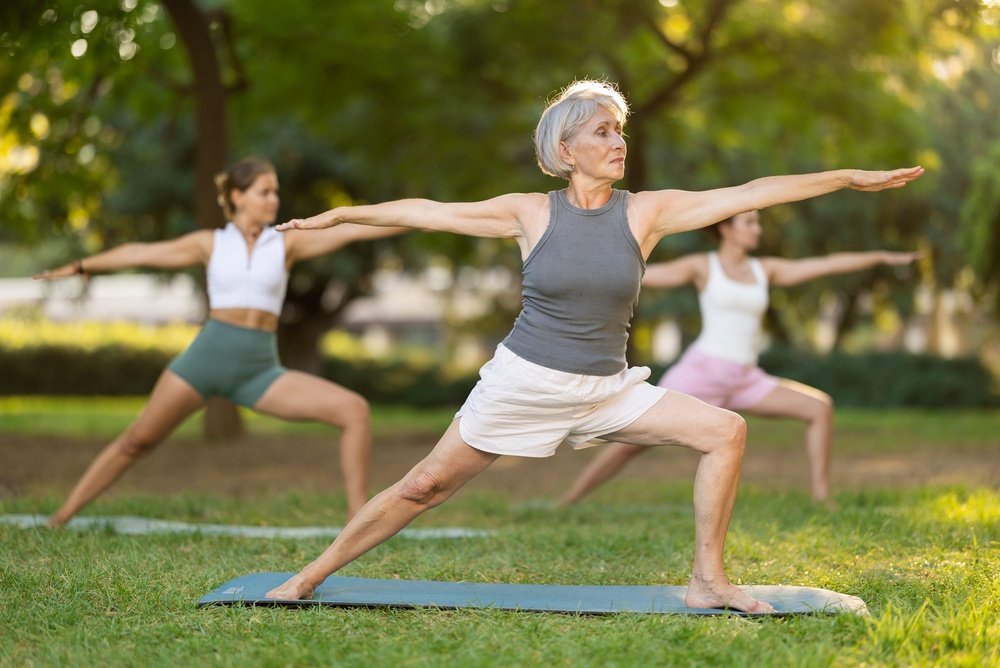
Yoga and the Art of Conscious Aging
Yoga is not just a normal exercise in which you touch your toes and try to make yourself flexible. Yoga is essentially a journey of connection, connecting the mind, the breath, and the body. This practice grows into a sanctuary over the years; instead of being a workout, it becomes a lifelong practice that people enjoy from their heart.
Everyone has to go through the stage of aging. However, in a world that continually presses us to “don’t wait around, grow old,” it is easy to look on growing older with trepidation. What if, however, we turn our attention around? But what if we were to embrace time and the change it brings in our body and skin and our outer appearance, rather than fighting it?
This is where yoga and the art of conscious aging come into play. Conscious aging isn’t about appearing or feeling like a twenty-something. It’s an appreciation of the here and now, an acknowledgment of our bodies, a mental sharpening, and a joyful, graceful, and strong celebration of every season.
What is conscious aging? How does yoga help in it?
Conscious aging is about aging consciously, intentionally, and with self-compassion. The traditional fitness model is one that focuses on high impact, fast pace, and pushing pain. Yoga brings the message of conscious aging to us, asking us to slow down, to listen to our own more subtle messages, and to develop our resilience from within.
As the human body evolves with time, the density of the bones, elasticity of the muscles, and mobility of the joints change. Yoga offers a framework that is sustainable, takes a low-impact approach, and facilitates these changes instead of working against them. Yoga helps improve the health condition of both the mind and body of the aging person thanks to gentle physical exercises, breath work, and mindfulness.
There are the most important advantages of yoga for maintaining health:
At an older age, maintaining physical form is among the major goals of life. The use of personal yoga sequences is one of the approaches to achieving this target.
- Increasing joints’ mobility: Stiffness in joints occurs over the years. Through gentle yoga poses, the connective tissue remains flexible and fluids circulate properly through the joints.
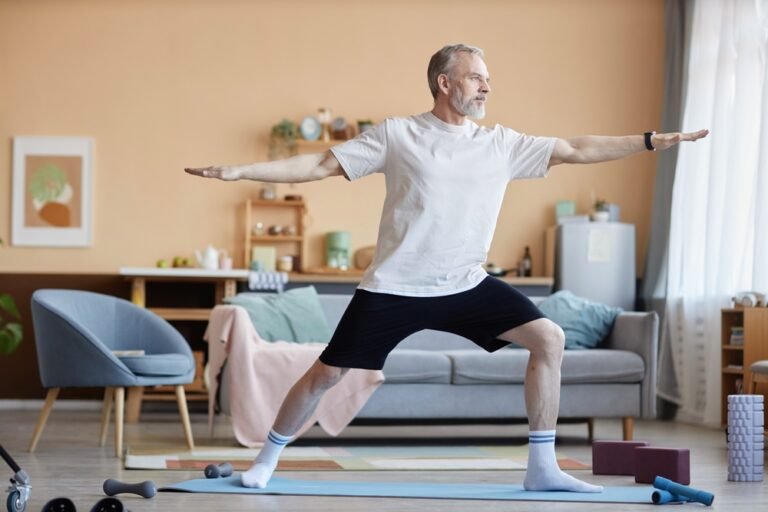
- Strengthening core, thighs, and back without tension on the joints: Creating functional strength involves some poses like Warrior II (Virabhadrasana II) and Chair Pose (Utkatasana), which strengthen muscles using the human body itself and without increasing tensions on the joints.
- Improving balance and stability: Standing poses help to develop muscle memory and engage the micro-stabilizers of our feet/ankles, therefore providing stability to our feet.
- Supporting Cardiovascular and Respiratory Health: Controlled breathwork (Pranayama) increases lung capacity, oxygenates the bloodstream, maintains overall cardiovascular health, reduces blood pressure, etc.
Gentle Yoga Poses for Conscious Aging and Mobility
Also Read: Yogic Identity: How Practice Changes the Way You See Yourself
There are no complex poses to go through to experience the great benefits of yoga. These poses are easy and basic, providing the best support for healthy and conscious aging.
- Mountain Pose (Tadasana): Standing tall with feet hip-width apart, roll shoulders back and tighten core. This posture strengthens the best posture, increases spatial sense, and strengthens the arches of our feet.
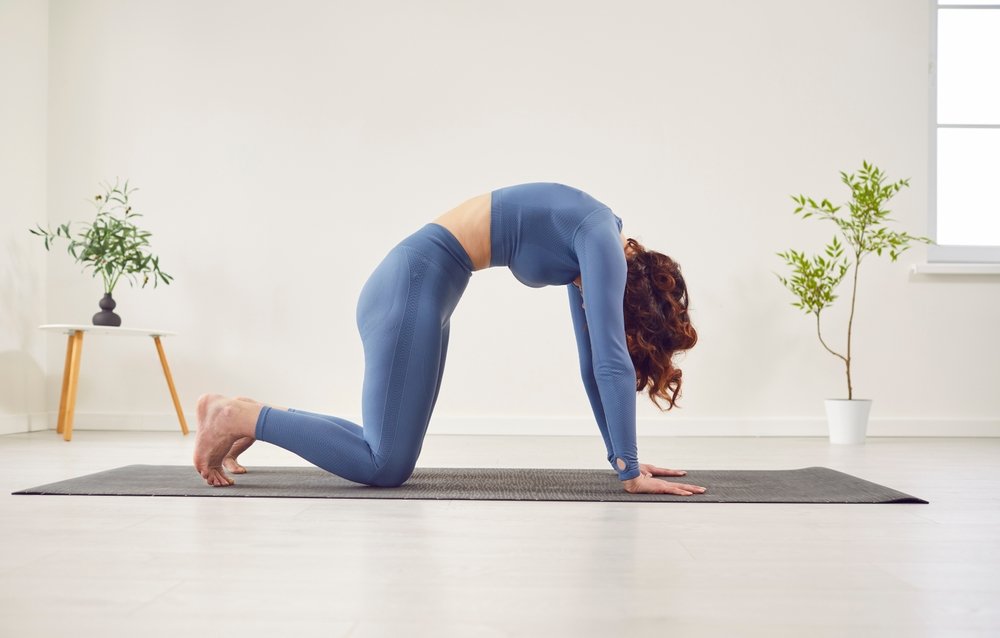
- Cat-Cow Stretch (Marjaryasana-Bitilasana): This stretch involves moving between a rounded and an arched spine while on hands and knees (or sitting in a chair) and helps keep the spine flexible and helps ease tension down the entire back.
- Tree Pose (Vrksasana): Standing up with one foot on the other calf or ankle is a safe pose to test balance. With a chair handy for light support, it’s more stable and helps to develop lower body strength.
- Legs-Up-the-Wall (Viparita Karani): A restorative pose in which we lie on our back with our legs raised up a wall. This position promotes venous circulation, alleviates leg swelling, and is soothing for the nervous system.
- Corpse Pose (Savasana): Letting the body lie flat and sustaining normal breathing facilitates the absorption of the positive effect of practice by the body, thus resulting in complete relaxation of cells and stress release.
Mindfulness and Breathwork for Conscious Aging
Physical postures (asanas) are part of yoga. The first step in conscious aging is the usage of conscious stress management, which implies mindful breathing (pranayama) and meditation.
Stress enters the nervous system during the changes in life (the job change, empty-nest syndrome, changes in the body, etc.). Breathing deeply through the abdomen calms the parasympathetic nervous system.
- Box Breathing: Inhale through the nose slowly and deeply for 4 counts.
- Breathe out slowly and naturally, for a count of 4, while exhaling.
- Hold at the end of the exhale for 4 counts.
- Do this for 3-5 minutes every day to calm the mind and bring focus.
How to Build a Safe Home Yoga Practice as You Age
Also Read: Sattvic Foods for Mental Clarity: A Practical Guide
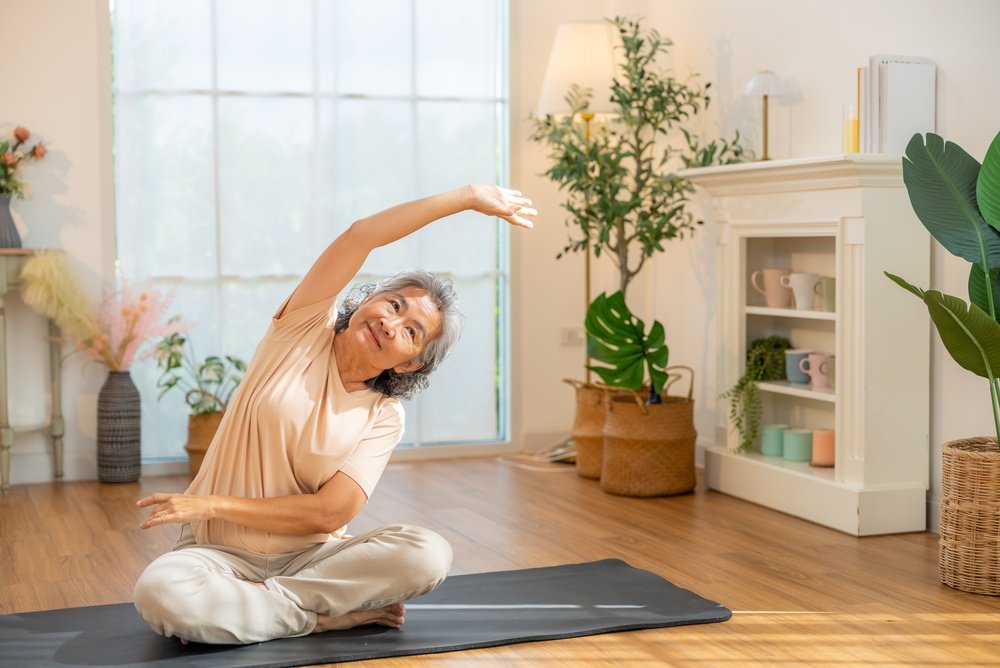
For establishing a yoga routine, consistency is more valuable than intensity. If you wish to practice at home and are willing to go for a sustainable approach for it, you need to keep in mind a few things, such as putting your comfort, goals that are real to achieve, and your safety first.
For practitioners looking to deepen their understanding, advanced yoga education can bring together asana, pranayama, meditation, alignment, and traditional yoga philosophy. A 300 hour yoga teacher training Bali course, for example, can offer a structured way to explore these aspects more deeply while developing a more mature and mindful approach to practice.
- Heed the Pain Cues: When you begin any exercise or yoga posture, it is normal to feel a bit of discomfort at first or a bit of stretching, but keep in mind if this slight discomfort ever turns into a sharp pain or something like pinching, you will be required to pause immediately.
- Use Props for Practice: To make your yoga easier, there are a few props that you can use, such as blankets, chairs, straps, and blocks that are helpful in making your practice more comfortable.
- Start Small: You don’t have to begin your practice with an hour or have to make yourself tired in the beginning only. It is always good to start your practice or general stretching for around 10 to 15 minutes every day to keep the consistency.
- Have Water: You need to make sure that you stay hydrated during the practice, so keep a bottle of water around and drink water before and after your yoga practice.
- Consult with Healthcare Professionals: If you are someone dealing with some health issues such as arthritis, osteoporosis, or any other medical condition, it will be advisable for you to consult your healthcare professional first before starting any new practice.
The goal is to have the mindset of conscious aging.
As with all things, it is important to remember that there are things that people cannot replicate when they are young that can be found in the older person.
Yoga provides us with the physical room to move freely and the mental space to enjoy our present situation. This understanding of yoga as a lifelong journey, rather than simply a form of exercise, is one of the principles associated with traditional yoga approaches such as those represented by Maa Shakti Yog Bali. As we go onto our mats, we take the path of self-care instead of self-judgment, movement instead of stagnation, and presence instead of worry.
The aging is not a hurdle to jump but an opportunity to step up into. Now get off your mat, take a deep breath, and start the journey together, and make sure to take one conscious breath at a time.