Sleep Science Meets Yoga: Your Guide to Deep Rest and Better Nights
Hey there, friend.
Let’s be real for a minute. How did you sleep last night?
When you are answering with groaning, eye rolling, or a clear recollection of glaring at your ceiling fan at 3:17 AM, we would like you to know: you are not alone.
Exhaustion is the complaint that we hear more than complaints about tight hamstrings or sore shoulders; in other words, exhaustion is the primary complaint of our students as yoga teachers. We are a unanimously weary society. At Maa Shakti Yog Bali, this is something we see every single day in our yoga community. Exhaustion shows up long before tight hamstrings or sore shoulders. Busy has become a decorative title we are proud to put on our coats of arms, and we consume caffeine till noon, and then we wonder why we cannot get our brain to relax at 10 pm.
We belonged to the I’ll-sleep-when-I’m-dead club. However, yoga transformed my attitude towards rest then. And the fascinating part? It was not merely magic; it was science.
Today, we would like to discuss the way of closing the gap between the science of sleep and the practice of yoga as we knew it in ancient times. We will get beyond the vague notion that yoga is soothing and explore the reasons and the means by which we bring ourselves to eventually sleep deeply and restoratively.
Pour yourself a cup of herbal tea, find a comfortable place to sit, and we are going to discuss how to hack your nervous system to sleep better.
The Bit of Science: Why You Can’t Just Switch Off.
To know why you will not sleep, we must examine your nervous system.
Consider your autonomic nervous system to be in two major states:
- The Sympathetic Nervous System: This is the one that is activated when you fight or run. It’s your body’s gas pedal. It releases adrenaline and the stress hormone (cortisol) to enable you to meet deadlines, traffic jams, and fearful emails.
- The Parasympathetic Nervous System: He is your rest and digest. It’s the brake pedal. It also lowers your heart rate, helps you digest, and sends your brain the message that it is safe to kick back.
The issue is that our life is fixed to the gas pedal the whole day in the modern world. It is physically impossible to get your body to change to sleeping mode by the time you get to bed because your body is drowning in stress hormones. You are unable to compel yourself to go to sleep when your body believes that there is a tiger in the room.
Here is where yoga comes in.
Yoga is as fine a device as we have for changing manual gears between fight or flight and rest and digest. It reduces cortisol and stimulates the synthesis of melatonin, the hormone that is necessary to sleep.
This does not require us to have complex pretzels and power sweat. We require stable asanas and conscious breathing.
The Techniques: Breathwork and Deep Rest Asanas.

Also Read: Yoga: A Journey Across Continents and Centuries
To create a working bedtime yoga practice, you should concentrate on the grounding (germane to the floor) and cooling (relaxing the energy) practices.
The following are my all-time favorite tricks to get your body to sleep, and they are supported by science and millennia of experience.
1. The Breath: Your Brain’s Remote Control.
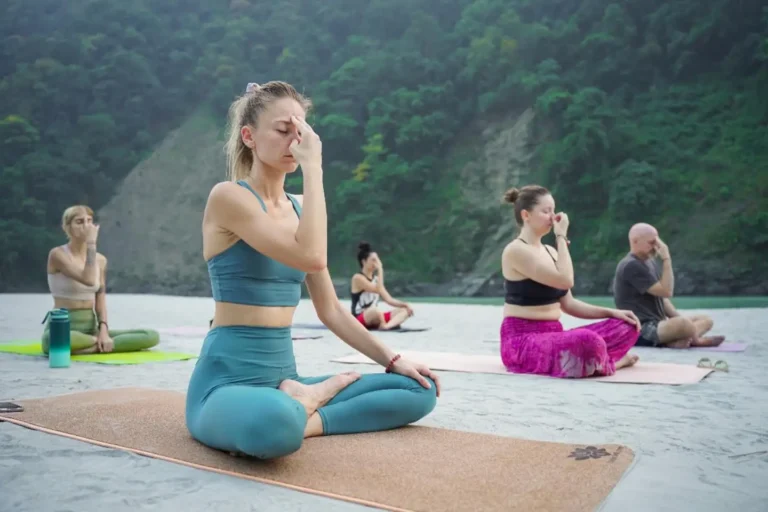
We must change our breath before we move our bodies. The quickest method of hacking your nervous system is through breathwork to sleep. When it comes to stress, you have shallow and fast breathing. As you extend the exhalation, you literally work your parasympathetic nervous system into action.
Try This: The 4-7-8 Technique
- The latter is commonly referred to as a natural calming agent of the nervous system.
- Get comfortable on your bed or a chair.
- Let go of all the air out of your mouth as a whoosh.
- Shut your mouth and breathe in quietly with your nose up to four in the mind.
- Count to seven, breathing in.
- Breathe out fully using your mouth, making a whoosh noise eight times.
- Repeat this cycle four times.
2. The Asanas: Resting Under Yoga Poses.
In the case of sleep, we desire restorative yoga. These are the poses that are to be maintained for a few minutes, with the help of props (pillows, blankets) to ensure that your body is full of support so that your muscles can entirely relax.
A. Legs Up the Wall (Viparita Karani)
This is the pose to do in case you do just one pose before going to sleep. It relieves the legs and relaxes the heart.
Position: Sit leaning against the wall. Lie back on the floor, swinging your legs against the wall. Your butt must be as near the wall as you can. Do not strain your legs: they need not be absolutely straight. Keep your arms close with your palms facing upward.
Stay here for 5 to 10 minutes. Just breathe—shut your eyes.
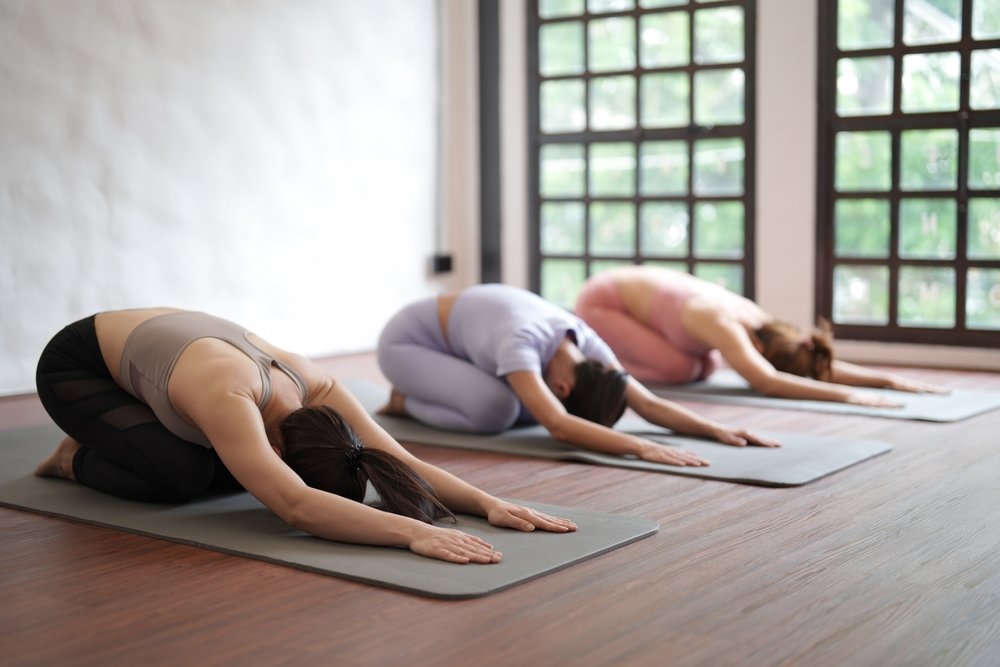
B. Pose of a Supported Child (Balasana).
This is a very relaxing position that resembled the fetal posture and informed the brain that they were safe.
How to do it: Kneel on the ground, face your big toes, and keep your knees apart. Press a large pill or pad in between the knees in an upright position. Gently bend your body down to have the belly and chest lying on the pillow. Turn your cheek to one side. Let your arms relax forward.
Wait here for 3 to 5 minutes (turning your head halfway through).
C. Reclining Butterfly Supported (Supta Baddha Konasana)
Our hips have such emotional strain held up there. And this windy intro sets that grip loose.
How to do it: Lie on your back. Pull your soles together and rest your knees to the sides, making a diamond form with the legs.
Notes: It is necessary to have pillows or rolled-up blankets under the outer thighs/knees to support them to ensure that there is no strain in the groin. One hand should be on your belly and the other on your heart.
Wait 5 minutes, and have the swell and fall of your breath under your hands.
Your Ten-Minute Bedtime Prescription.
- You don’t need an hour. Regularity overpowers vehemence. Do this this evening one next to your bed:
- Disconnection: Turn off phone (or go to another room) 30 minutes before going to sleep.
- Legs Up the Wall: 5 minutes to get the day out of us.
- Support Child: 3 minutes to rest.
- The 4-7-8 Breath: Do 4 rounds on the edge of your bed preceding the time of lying down.
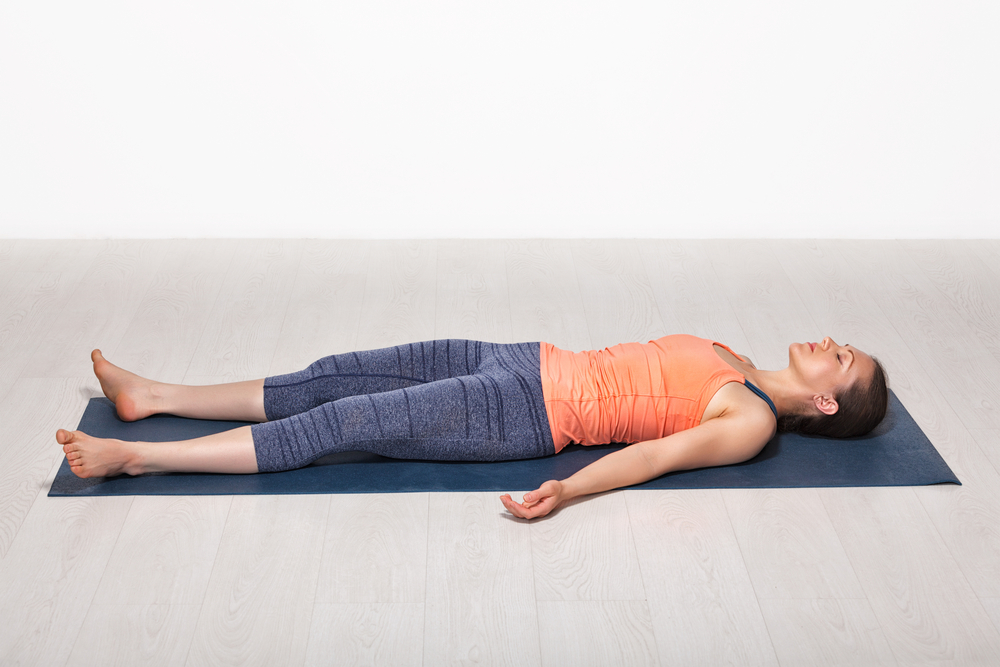
The Final Savasana
Also Read: The Science of Auras and How Yoga Affects Your Energetic Field
It is important to remember that you do not sleep, but you permit sleep.
They aren’t designed to make you fall asleep; they are designed to help set the tone for you to naturally drift off. Be kind to yourself if it takes longer than you anticipate for your nervous system to adjust from operating on overdrive for several years to a more relaxed state.
It is natural for it to take time, so allow yourself that time. Good luck tonight with these yoga for sleeplessness techniques, and we truly hope they allow you to receive the replenishing sleep that you deserve!